
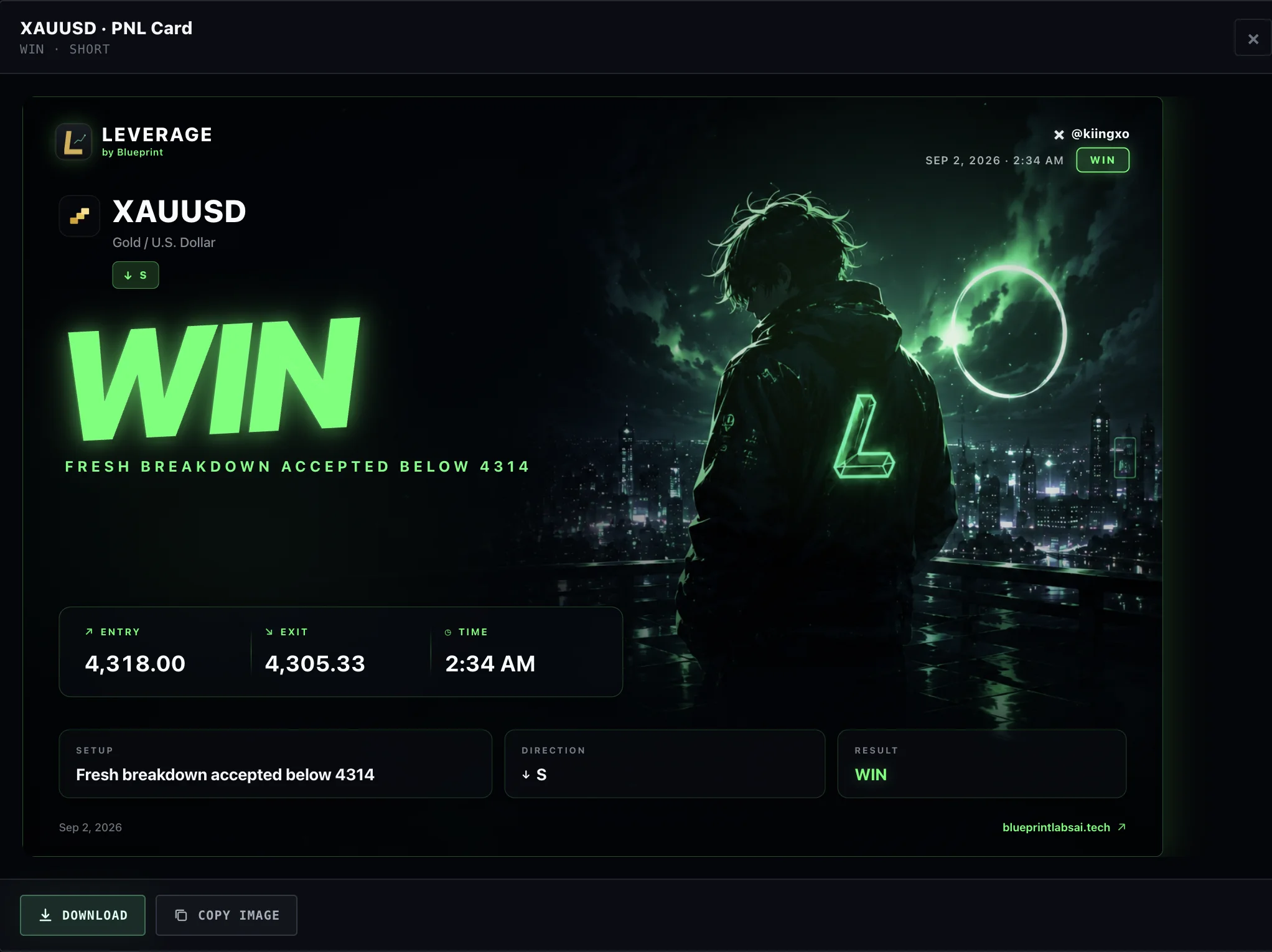
Most conversations about AI in trading treat the market as a generic input. Price goes in, signal comes out. The assumption underneath that is that the intelligence lives entirely in the model, and the model can handle any instrument if you give it enough price data.
We do not think that is true, and shipping BTC support for Leverage gave us a clear way to explain why.
Gold and BTC have fundamentally different market structures, and those differences matter a lot when you are building a system that produces reads the user is expected to act on.
Gold trades in sessions. There are three that matter: London, New York, and the Asian overlap. Liquidity builds and drains in predictable windows. Setup quality is tied to where you are in that cycle. A gold read that ignores session context is not a gold read. It is a pattern match.
BTC does not have sessions. It runs 24 hours a day, seven days a week, with no closes and no weekends. But it has its own set of forces that shape price at any given moment: perpetual funding conditions, ETF flows, market sentiment, exchange dynamics, news cycles that move fast and do not wait for business hours. A BTC read that ignores those is making the same mistake in a different direction.
So when we added BTC to Leverage, we did not just point the existing read engine at a crypto chart. We built a second context layer that assembles a live picture of the BTC market before every read: current conditions, sentiment, funding state, and recent relevant news. That context is injected alongside the chart so the system is making decisions based on where the market actually is, not just what the candles look like.
The lesson is not specific to trading. It is a general pattern in applied AI: the model is not the intelligence. The context is. A capable model with bad or missing context will produce confident, wrong output. A capable model with accurate, current, well-structured context produces reads that are actually useful. The work in building an AI tool for any high-stakes domain is mostly the second part, not the first.
One bug this work surfaced was in the Market Map system, which lets users store multi-timeframe context notes per asset. The storage was not properly scoped by asset, which meant a gold context map could silently bleed into a BTC read if you switched assets without a manual reset. Fixed by keying all context storage strictly to the active asset. Contamination between contexts is a silent failure mode that is hard to catch without deliberately testing for it.
Still running closed beta across both assets. The BTC reads have been well received, particularly from users who were already on the gold version and wanted coverage on crypto positions.